Red Elegance — Vintage Fashion Collage
Use the uploaded user photo as the ONLY identity reference for the main human subject. Preserve the user's exact recognizable identity with maximum fidelity: facial structure, face shape, forehead, eyebrows, eyes, eyelids, natural eye shape, nose, lips, mouth structure, cheeks, jawline, chin, skin tone, skin texture, hairline, natural hair characteristics, facial hair if present, and every distinctive facial feature. Do not replace the user with the reference model's identity. Do not beautify, slim, age, de-age, reshape, feminize, masculinize, or otherwise redesign the user's face. The user's identity must remain unmistakably recognizable. The reference image controls the expression, pose, styling, composition, lighting, environment, and visual treatment only. If the user's source photo has a different gender presentation, retain the user's identity and adapt the reference styling naturally without changing who the person is.
Recreate the reference as a vertical editorial Instagram-story-style fashion collage, closely matching the original composition and visual hierarchy. Use a warm, muted beige/taupe textured interior wall as the full background, with subtle paper-like grain and a softly uneven plaster surface. The overall image should feel like a carefully assembled vintage fashion-photo collage rather than a conventional single photograph. Maintain a tall approximately 9:16 composition.
MAIN FOREGROUND SUBJECT: Place one large cutout portrait/full-body fashion figure prominently from the lower-left through the center and extending toward the bottom edge. The subject is standing naturally in a relaxed fashion pose, shown approximately from head to below the knees/near full length, with the body angled slightly toward the camera. Match the reference posture precisely: one arm raised with the hand gently touching or adjusting the hair beside the head/neck, while the opposite hand rests around the waist and lightly gathers or holds the flowing fabric. Keep the shoulders relaxed, torso naturally elongated, waist and body proportions realistic, and hands anatomically correct. The head is slightly tilted and turned toward the side, with the eyes looking downward and away from the camera in a soft, introspective fashion-editorial gaze. Reproduce the reference's calm, confident, slightly dreamy expression: relaxed eyelids, composed eyebrows, natural lips, subtle seriousness, no broad smile. The expression must come from the reference, never from the user's source photo.
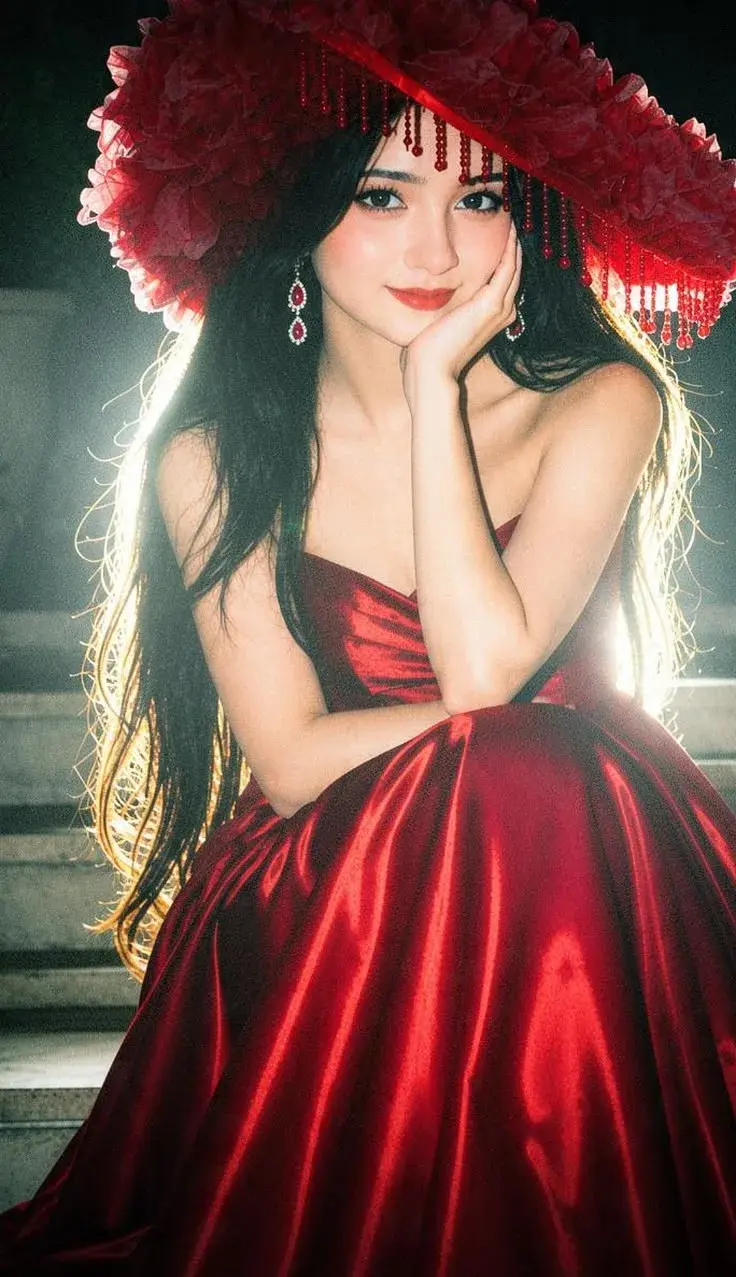
CLOTHING/STYLING: Recreate the luxurious red traditional South Asian festive-fashion styling visible in the reference. Dress the user's identity in a rich deep-red/crimson coordinated ensemble consisting of a fitted red blouse/choli with a structured neckline, a matching richly patterned long skirt/lehenga with ornate woven or brocade detailing, and a flowing red dupatta draped naturally around the shoulders and body. The fabrics should appear premium, slightly glossy and textured, with intricate tonal embroidery/jacquard motifs that remain visible but sophisticated. Preserve realistic fabric folds, weight, layering, stitching, and natural draping. Include subtle traditional jewelry similar to the reference, such as a delicate necklace and small earrings, plus a simple wristwatch/bracelet if visually appropriate. Accessories must complement the outfit without overpowering the user's face or identity.
CUTOUT EFFECT: The large foreground subject should have a clean hand-cut photographic silhouette surrounded by a thin, irregular white sticker/paper outline, clearly separating the figure from the beige wall. The outline should follow the contours of the hair, shoulders, arms, clothing and lower body naturally, with slight handmade imperfections rather than a perfectly digital vector edge. Add a subtle soft shadow around the cutout to make it feel physically layered onto the background.
BACKGROUND PORTRAIT LAYER: Behind the main foreground figure, near the upper-left area, include a large faint secondary portrait of the same user identity, partially obscured by the foreground cutout. This background portrait should be softly blended into the wall like an enlarged faded photograph, with warm low-contrast tones and slight transparency. Keep the same recognizable identity but make it secondary and atmospheric.
POLAROID/PRINTED PHOTO COLLAGE: On the right half of the composition, arrange three separate rounded-corner photographic prints/cards, each with a thick off-white/cream border. They should look like physical instant-photo prints casually layered and slightly overlapping one another. Match the approximate positions and rotations of the reference: one larger horizontal print near the upper-right, rotated slightly clockwise; one medium portrait-oriented print overlapping below it around the center-right, rotated slightly counterclockwise; and one smaller vertical print toward the lower-right, tilted slightly clockwise. Keep generous cream-white borders, softly rounded corners, realistic paper texture and subtle drop shadows.
UPPER-RIGHT PRINT: Show the same user identity wearing the same red outfit, photographed indoors against the same warm beige wall. Reproduce the reference pose: the subject stands near the wall with one hand raised to the forehead/hair, head slightly tilted, body relaxed, and gaze directed toward the camera or slightly off-camera as seen in the reference. Use warm sunlight striking the face and upper body, producing strong golden highlights and soft directional shadows.
CENTER-RIGHT PRINT: Show a closer three-quarter portrait of the same user identity in the red outfit, seated or leaning naturally with the torso angled slightly toward the camera. Match the reference's relaxed fashion pose, with one arm resting naturally and the other interacting subtly with the clothing. The head is turned slightly upward/sideways and the eyes look off toward the upper-left rather than directly into the camera. Preserve a composed, confident, editorial expression.
LOWER-RIGHT PRINT: Show a smaller full/three-quarter-body photograph of the same user identity from a slightly different pose, standing sideways or turned partly away while raising one hand toward the hair/head. Match the reference's graceful fashion-editorial body language, with the red flowing skirt/dupatta visible and strong warm sunlight shaping the silhouette.
All three printed photographs must depict the USER'S identity, not the reference person's identity. They are variations of the same person and outfit within the collage, while each pose, expression, gaze and head position follows the corresponding reference photograph.
LIGHTING: Reproduce warm late-afternoon golden sunlight entering from one side of the room. Use strong directional sunlight with amber/orange highlights on the red fabric and skin, pronounced but soft-edged shadows on the beige wall, and natural falloff into darker areas. The reference has a nostalgic analog-photo character: retain warm skin rendering, slightly muted shadows, gentle highlight rolloff, subtle film grain, mild halation, faint softness, and realistic photographic texture. Avoid sterile digital sharpness.
CAMERA/IMAGE CHARACTER: Photographic fashion-editorial aesthetic, natural perspective resembling a 35–50mm lens, realistic proportions, moderate depth of field, crisp facial detail on the main subject while background layers remain slightly softer. Preserve authentic photographic imperfections, subtle grain, slight exposure variation, paper texture, imperfect print edges and natural shadowing. The collage should feel handmade, stylish, nostalgic and premium.
COMPOSITION PRIORITY: The large foreground cutout is the dominant element and should occupy roughly the left 60–65% of the frame. The three white-bordered prints form a diagonal visual rhythm down the right side. Keep the upper-left faded portrait partially hidden behind the main figure. Preserve the beige negative space around the collage. Do not center the entire composition. Do not simplify it into a single portrait. Do not remove the layered photographs, white borders, sticker outline, textured wall, or warm shadows.
IDENTITY/EXPRESSION RULE: USER PHOTO = WHO THE PERSON IS. REFERENCE = HOW THE PERSON appears in the scene. Transfer only the reference's poses, body language, facial expression, gaze direction, head orientation, styling, composition and photographic treatment. Never transfer the reference person's facial identity. Never let the user's original smile, gaze, head angle or expression override the reference. Every visible face across the collage must remain a consistent, recognizable version of the user's uploaded identity.
ANATOMY AND QUALITY: realistic human anatomy, natural hands and fingers, correct limb proportions, believable fabric interaction, realistic hair strands, authentic skin texture, consistent facial identity across every photograph, physically plausible shadows and perspective. No duplicated limbs, distorted hands, warped face, plastic skin, artificial facial reconstruction, excessive beauty retouching, identity drift, random accessories, incorrect clothing geometry, or inconsistent person across the collage. Final result should be photorealistic, cinematic, high-detail, warm analog fashion photography, premium editorial collage, nostalgic Instagram aesthetic, vertical 9:16.












%22%2F%3E%3Cpath%20d%3D%22M24%2011L34%2015V23C34%2029.5%2029.7%2035.3%2024%2037C18.3%2035.3%2014%2029.5%2014%2023V15L24%2011Z%22%20fill%3D%22%23FFFFFF%22%20fill-opacity%3D%220.15%22%20stroke%3D%22%23FFFFFF%22%20stroke-width%3D%221.8%22%20stroke-linejoin%3D%22round%22%2F%3E%3Cpath%20d%3D%22M19%2024L22.5%2027.5L29%2020.5%22%20stroke%3D%22%23FFFFFF%22%20stroke-width%3D%222.2%22%20stroke-linecap%3D%22round%22%20stroke-linejoin%3D%22round%22%2F%3E%3Cdefs%3E%3ClinearGradient%20id%3D%22bg_shield%22%20x1%3D%220%22%20y1%3D%220%22%20x2%3D%2248%22%20y2%3D%2248%22%20gradientUnits%3D%22userSpaceOnUse%22%3E%3Cstop%20stop-color%3D%22%23059669%22%2F%3E%3Cstop%20offset%3D%221%22%20stop-color%3D%22%2310B981%22%2F%3E%3C%2FlinearGradient%3E%3C%2Fdefs%3E%3C%2Fsvg%3E "Vivek Sharma portrait")