Luxury Camel Fashion Editorial Portrait
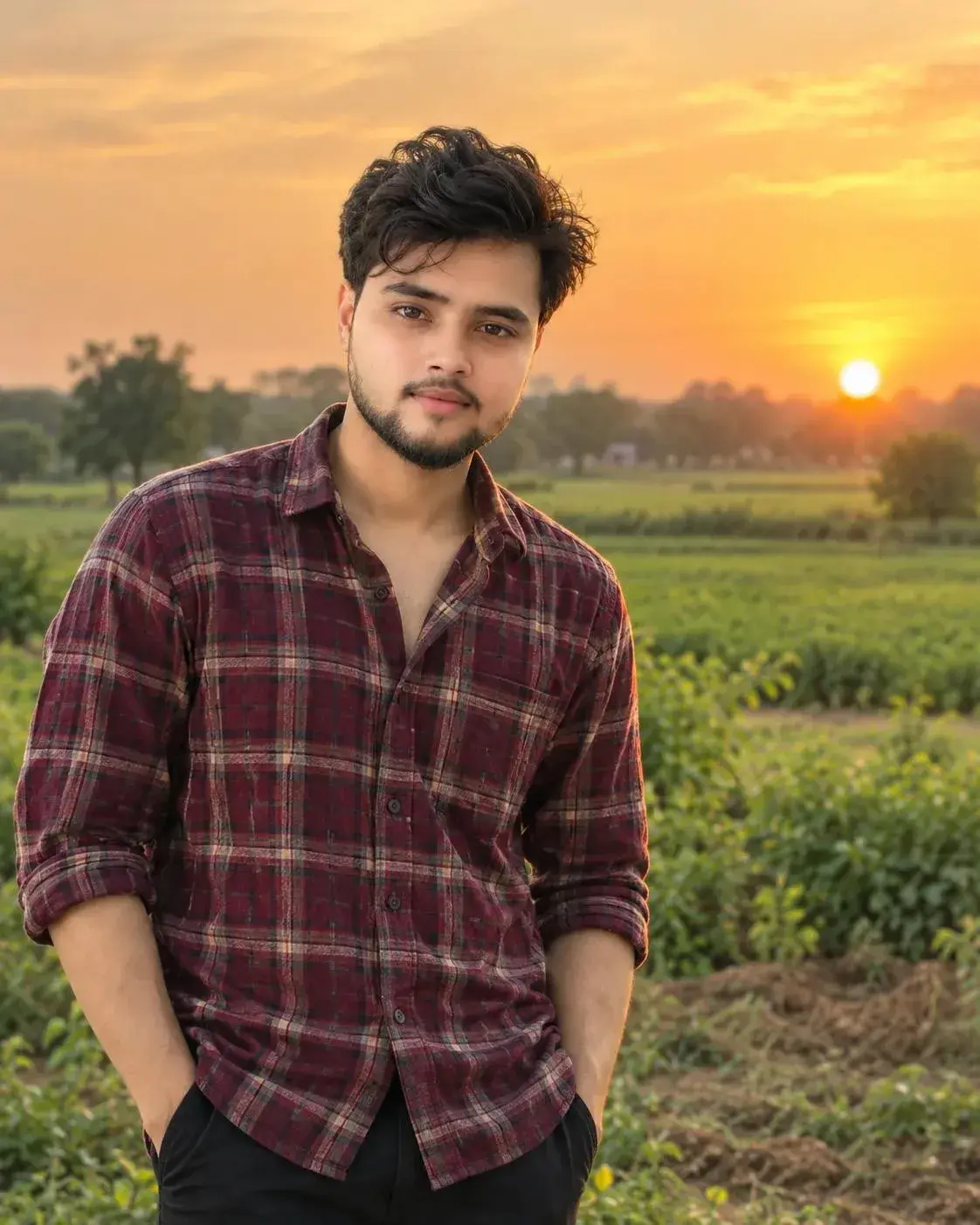
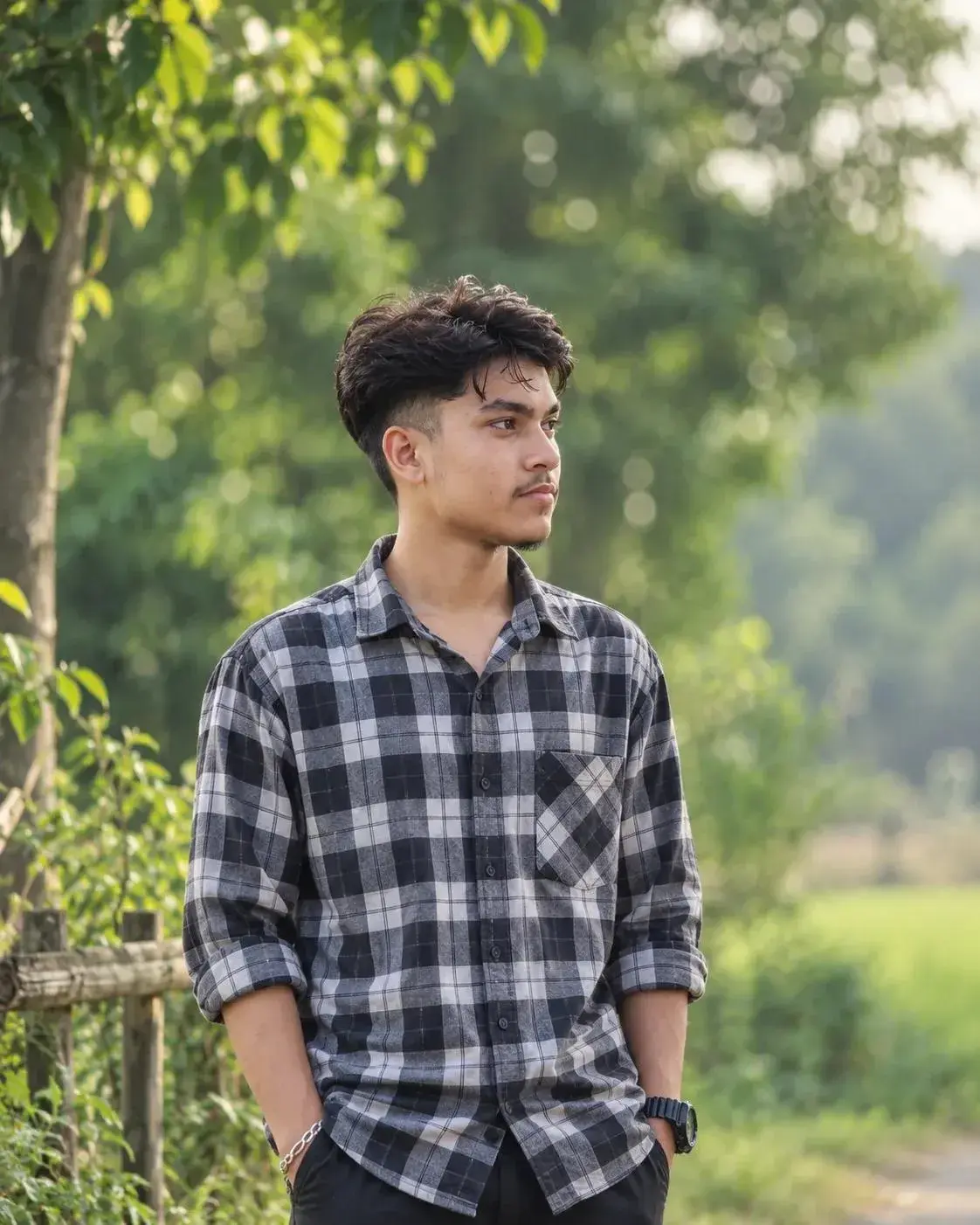
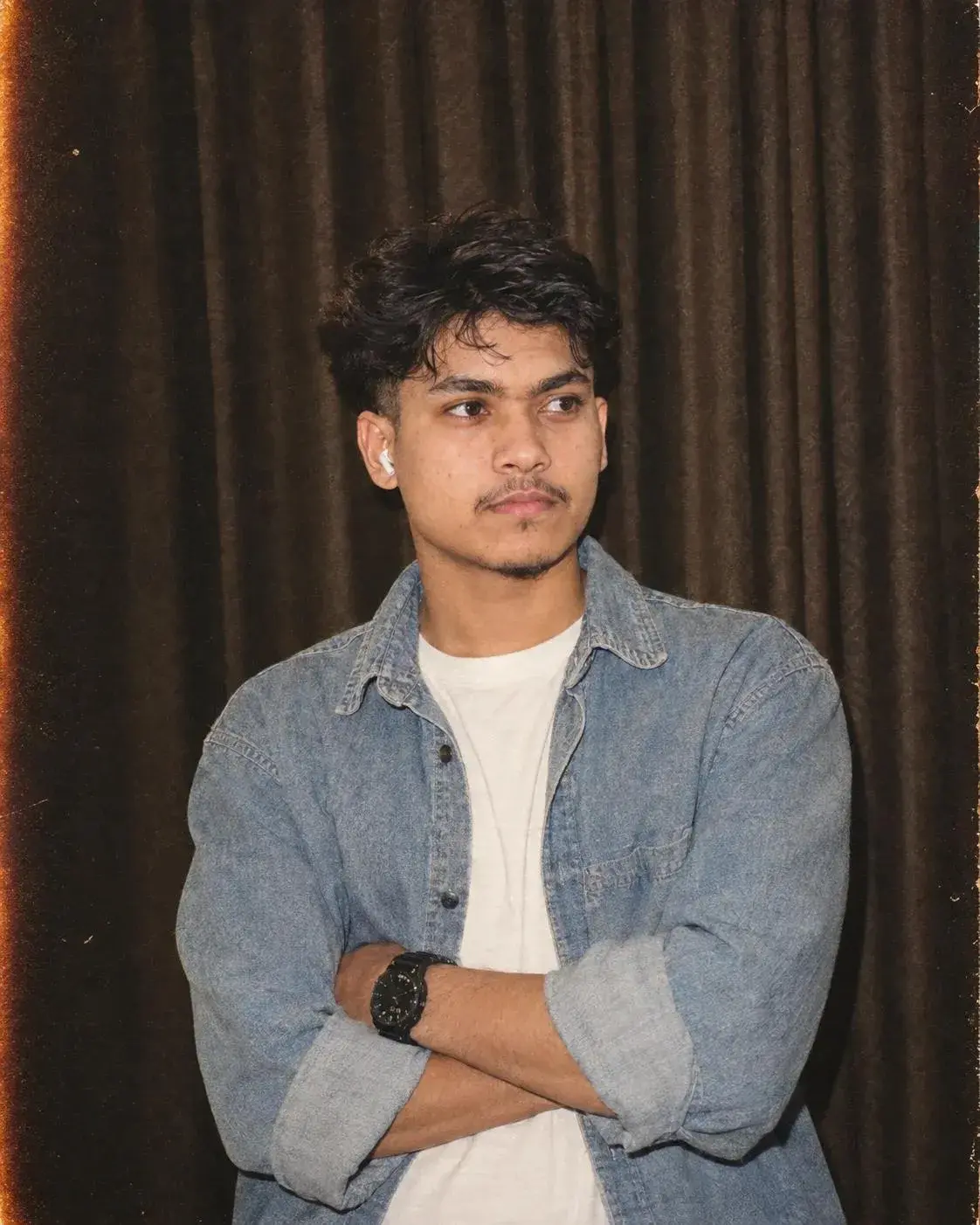
Use the uploaded user photo as the ONLY and STRICT source of the human subject’s identity. Preserve the exact recognizable person with maximum fidelity: facial structure, facial proportions, face shape, forehead, eyebrows, eyes, natural eye shape, nose, lips, mouth structure, jawline, cheekbones, chin, skin tone, natural skin texture, hairline, hair characteristics, facial hair if present, age, and every distinctive facial feature. The final image must unmistakably depict the same person from the uploaded photo. NEVER replace the user's identity with any person shown in the reference image. NEVER beautify, reshape, slim, enlarge, feminize, masculinize, age, de-age, or redesign the face. The uploaded photo determines WHO the subject is; the reference image determines HOW that person appears, poses, dresses, and expresses themselves.
Create a highly photorealistic luxury fashion-editorial poster that closely recreates the supplied reference image. Use a vertical 4:5 composition and a sophisticated warm camel, beige, taupe, and muted-brown palette. The design contains FOUR coordinated appearances of the SAME user identity: three tall photographic panels in the background and one dominant foreground portrait. Every face must belong to exactly the same person from the uploaded photo.
BACKGROUND: Create a smooth matte dusty camel/taupe background covering the entire canvas, with subtle paper texture and very soft tonal variation. Keep the environment minimal and uncluttered. No scenery, architecture, random objects, logos, or distracting elements. The overall appearance should resemble a premium luxury fashion magazine advertisement.
THREE BACKGROUND PANELS: Place three tall, narrow rectangular portrait panels behind the foreground subject, matching the reference layout. The central panel is tallest and positioned slightly higher; the left and right panels sit somewhat lower, creating a staggered layered composition. Keep the rectangular panel edges clean and subtle.
LEFT PANEL: Show the user's exact identity in a medium-full fashion portrait wearing sophisticated camel/beige tailoring. The body is turned slightly sideways while the face turns toward the camera. One arm is bent upward, with one hand delicately resting beneath the chin or along the lower cheek. Fingers must be realistic and naturally positioned. The head has a subtle elegant tilt. Expression is calm, confident, refined, and mildly serious, with relaxed closed lips and a composed gaze directed toward the camera. Reproduce the reference expression rather than the user's source-photo expression.
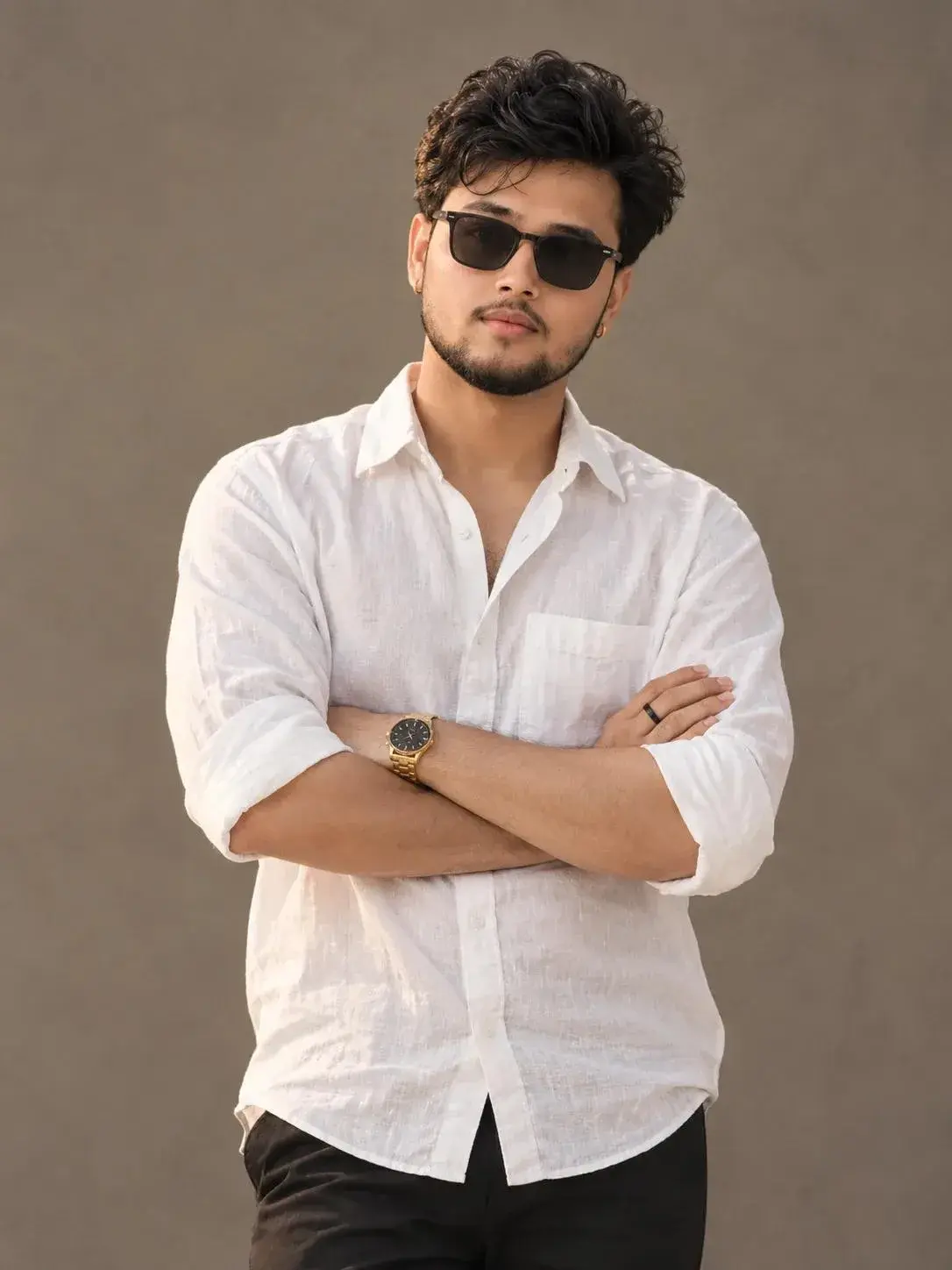
CENTER TOP PANEL: Show a larger chest-up portrait of the same exact user identity. Face mostly forward with a subtle three-quarter orientation and slight head tilt. Give the subject a poised, confident, sophisticated editorial expression. Eyes face toward the camera and are partially covered by sleek narrow dark cat-eye sunglasses matching the reference. One hand is raised beside the face, with fingers naturally touching the cheek/jaw area. Preserve realistic anatomy. Style the user's existing hair into polished, softly voluminous fashion-editorial hair while preserving their actual hairline, texture, length, density, and recognizable characteristics.
RIGHT PANEL: Show the same exact identity in matching camel/beige tailored fashion. Turn the body substantially away from the camera in a three-quarter rear/side pose, with one shoulder closer to camera and torso angled away. Rotate the head back toward the viewer. The face looks toward the camera with a calm, confident, serious editorial expression. Keep the arms naturally positioned near the torso. Recreate the reference's posture and head rotation without copying the reference person's identity.
FOREGROUND MAIN SUBJECT: Place the largest version of the user's exact identity in the lower-middle foreground, overlapping the three background panels. Show a medium-full or three-quarter fashion portrait extending approximately to the thighs/knees. Body faces almost directly toward the camera with a subtle three-quarter orientation. Head upright with a slight natural tilt. Expression is poised, calm, confident, sophisticated, and serious. Eyes look directly toward the camera and lips remain relaxed and closed. Do not copy the expression or gaze from the uploaded source photo.
HAND POSITION: Both hands are positioned at the center of the torso, naturally holding the front lapels/edges of the blazer. Fingers overlap subtly around the chest or upper waist. Elbows angle slightly outward. Hands, fingers, wrists, and arms must be anatomically accurate. No extra fingers, missing fingers, duplicated hands, warped wrists, or unnatural joints.
CLOTHING: Recreate the reference's sophisticated monochromatic camel/tan tailoring. Use a structured relaxed-fit or oversized blazer with broad lapels, subtle shoulder structure, long sleeves, realistic buttons, sleeve details, seams, pockets, stitching, and natural fabric folds. Add matching tailored trousers where visible. Maintain a harmonious warm beige/camel color scheme. If the user's gender presentation differs from the reference, preserve the user's identity and natural presentation while translating the same tailored fashion aesthetic appropriately. Never change identity or gender to match the reference.
HAIR: Preserve the user's actual hair identity, including hairline, length, density, texture, and natural characteristics. Arrange it into polished, softly voluminous editorial styling inspired by the reference. Individual strands should remain realistic with subtle shine and natural movement.
ACCESSORIES: Include the narrow dark sunglasses in the central upper portrait as seen in the reference. Keep accessories minimal, elegant, and fashion-focused. Do not introduce unnecessary jewelry or props.
LIGHTING: Use professional soft studio lighting with a large diffused key light from the front/upper side. Create smooth illumination across the face and clothing with gentle dimensional shadows. Add subtle fill to retain facial detail and a delicate edge light around hair and shoulders. Keep lighting warm, clean, refined, and consistent across all four portraits. Avoid colored lights and harsh unnatural shadows.
COLOR GRADING: Use warm camel, beige, taupe, cream, and muted brown throughout the composition. Keep skin natural and realistic rather than monochrome. Apply premium fashion-magazine grading with soft contrast, controlled highlights, gentle shadows, subtle film texture, and a polished editorial finish.
CAMERA: Simulate high-end professional fashion photography using approximately a 50–85mm lens perspective. Maintain natural facial and body proportions with minimal distortion. Camera is approximately eye level for the main foreground subject. Use high-resolution medium-format editorial quality, crisp facial detail, realistic skin pores, authentic hair strands, detailed fabric texture, controlled depth of field, and natural perspective.
LAYERING: The three background portraits must appear as separate photographic panels behind the foreground figure. Preserve their staggered heights and clean rectangular geometry. The foreground subject overlaps the lower portions of the panels, creating the sophisticated fashion-poster collage effect. Keep background portraits recognizable while giving the foreground subject the strongest visual emphasis.
TYPOGRAPHY: Recreate the minimal white typography from the reference near the lower-left/lower-middle area. Add a small uppercase line reading “O MELHOR DA”. Beneath it, add a large bold white “Moda”. Below/alongside it, add a large elegant thin-weight “Feminina”. Match the reference's approximate hierarchy, spacing, alignment, scale, and placement. Typography must remain readable without covering important facial features or hands. Do not add logos, watermarks, random words, extra letters, or unrelated graphic elements.
COMPOSITION: Maintain generous beige negative space around the outer edges. Three staggered vertical portrait panels occupy the upper and middle background while the dominant foreground subject occupies the lower center and overlaps them. Preserve the reference's visual balance and overall geometry rather than converting it into a conventional single portrait.
EXPRESSION AND GAZE PRIORITY: The user's uploaded photo provides identity ONLY. The reference image provides expression, emotion, gaze, eye openness, eyebrow position, mouth position, head rotation, head tilt, and body behavior. Reconstruct the reference's calm, confident, sophisticated editorial emotion. If the user's source photo has a smile, different gaze, closed eyes, or different head position, ignore those aspects and follow the reference.
IDENTITY CONSISTENCY: All four appearances must depict the exact same user. Do not blend the user's facial characteristics with the reference models. Do not generate different people for different panels. Preserve identical recognizable facial geometry across every appearance while changing only pose, expression, gaze, styling, and body orientation according to the reference.
PHOTOREALISM: Extremely realistic anatomy, natural skin texture, realistic eyes and lips, authentic hair, accurate hands and fingers, believable fabric folds, physically consistent shadows, clean edges, and realistic perspective. Avoid plastic skin, excessive retouching, generic AI faces, facial distortion, unnatural symmetry, duplicated features, warped limbs, or artificial textures.
FINAL RESULT: Produce a premium photorealistic luxury fashion campaign poster faithfully recreating the reference: four appearances of the user's exact identity, three staggered vertical portrait panels, one dominant foreground fashion portrait, sophisticated camel/beige tailoring, elegant editorial poses, precise reference-matched expressions and gazes, warm minimalist background, soft studio lighting, refined white typography, realistic skin and fabric detail
%22%2F%3E%3Cpath%20d%3D%22M24%2011L34%2015V23C34%2029.5%2029.7%2035.3%2024%2037C18.3%2035.3%2014%2029.5%2014%2023V15L24%2011Z%22%20fill%3D%22%23FFFFFF%22%20fill-opacity%3D%220.15%22%20stroke%3D%22%23FFFFFF%22%20stroke-width%3D%221.8%22%20stroke-linejoin%3D%22round%22%2F%3E%3Cpath%20d%3D%22M19%2024L22.5%2027.5L29%2020.5%22%20stroke%3D%22%23FFFFFF%22%20stroke-width%3D%222.2%22%20stroke-linecap%3D%22round%22%20stroke-linejoin%3D%22round%22%2F%3E%3Cdefs%3E%3ClinearGradient%20id%3D%22bg_shield%22%20x1%3D%220%22%20y1%3D%220%22%20x2%3D%2248%22%20y2%3D%2248%22%20gradientUnits%3D%22userSpaceOnUse%22%3E%3Cstop%20stop-color%3D%22%23059669%22%2F%3E%3Cstop%20offset%3D%221%22%20stop-color%3D%22%2310B981%22%2F%3E%3C%2FlinearGradient%3E%3C%2Fdefs%3E%3C%2Fsvg%3E "Vivek Sharma portrait")